

Is It Real? The Ultimate Guide to Distinguishing True Gold from Fool’s Gold
It is the moment every prospector dreams of. You’re leaning over a gold pan in a sun-drenched creek in New South Wales, or perhaps you’re scraping back the dry crust of a wash in the California High Desert. Suddenly, something catches the light. A brilliant, metallic glint flashes from beneath the black sand. Your heart skips a beat. You think, “This is it. This is the one.”
But before you start planning how to spend your riches, you need to answer the oldest question in mining: Is it real gold, or is it Pyrite?
"Fool’s Gold" has earned its name for a reason. For centuries, it has tricked even experienced miners into thinking they’ve struck it rich. In 2026, with gold prices hitting historic highs, the stakes for telling the difference have never been higher. Whether you are "undertaking" a weekend trip with the kids or managing an 80-acre claim, mastering the physical tests of mineralogy is the first step toward becoming a successful prospector.
1. The Anatomy of the Pretenders: What is Fool’s Gold?
To beat the enemy, you have to know the enemy. "Fool’s Gold" is usually one of three minerals: Pyrite, Chalcopyrite, or Mica.
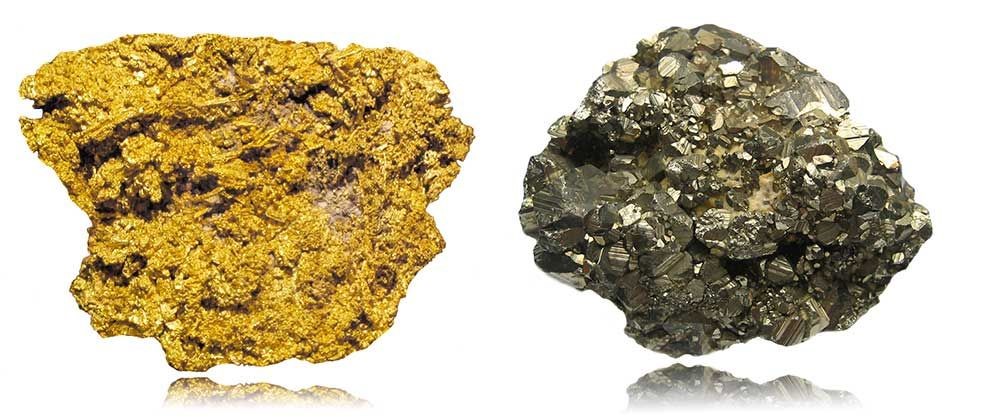
- Pyrite (Iron Sulfide): The most common culprit. It has a brassy yellow color and a metallic luster. It often grows in perfect cubes, which should be your first clue.
- Chalcopyrite (Copper Iron Sulfide): This looks even more like gold than Pyrite. It has a deeper yellow hue, but it often tarnishes to a "peacock" iridescent purple or blue.
- Mica: While not a metal, weathered Mica can flake into tiny "gold" scales that float in the water, tricking beginners during the panning process.

2. The Color & Luster Test: Look, Don’t Touch
The first test is purely visual, but it requires a trained eye.
True Gold
Gold has a very specific "buttery" yellow glow. It does not change color depending on the angle of the light. If you shade the gold with your hand, it will still look yellow in the shadows. This is because gold is a "noble metal"—it does not oxidize or tarnish.
Fool's Gold
Pyrite is "brassy." It looks like an old trumpet. If you rotate a piece of Pyrite in the sun, it will flash brilliantly at one angle and then look dark or greenish-black at another.
The Shadow Test: Shroud the specimen with your hand to create a shadow. Real gold will maintain its yellow luster even in low light. Fool's gold will lose its "sparkle" and appear dull.
3. The Malleability Test: The "Poke" Method
This is the gold standard of field tests. Gold is one of the most malleable substances on Earth. This means it can be hammered, bent, or squashed without breaking. Pyrite, on the other hand, is brittle.
The Test
Find a small needle or a sharp pocket knife. Place your specimen on a hard surface and apply firm pressure with the point of the needle.
- Gold: The needle will leave a "dent." The gold will move out of the way, much like lead or soft wax. You can actually "carve" into a gold nugget.
- Pyrite: It will shatter. Under pressure, Pyrite will crack into tiny, jagged shards or turn into a blackish-green powder.
Pro-Tip: If you have a small "specimen" in your pan and you aren't sure, try to bit it gently (if it’s large enough) or press it between two flat rocks. If it flattens into a pancake, congratulations—you’re rich. If it crunches into sand, keep digging.
4. The Streak Test: The Ultimate Truth-Teller
If you are at home or back at "Base Camp," the streak test is the most scientific way to identify your find. This test identifies the color of the mineral in its powdered form.
The Test
You need a piece of unglazed white porcelain (the back of a bathroom tile or the "ring" on the bottom of a ceramic coffee mug works perfectly). Rub your specimen firmly across the white surface as if you were drawing with a crayon.
- True Gold: It will leave a Golden Yellow streak. The powder is the same color as the metal.
- Pyrite: It will leave a Greenish-Black or brownish streak. Even though the rock looks gold, its "soul" is dark.
- Chalcopyrite: Leaves a greenish-black streak.
- Hematite (sometimes mistaken for gold): Leaves a reddish-brown streak.
5. The Specific Gravity Test: The Physics of Weight
As we discussed in our "Waterfall Secrets" blog, gold is incredibly heavy. Its specific gravity is approximately 19.3, meaning it is 19 times heavier than an equal volume of water. Pyrite has a specific gravity of about 5.0.
The Panning Test
When you are panning, this weight difference is your best friend.
- Mica: Because Mica is light and "flaky," it will "dance" in the water. As you swirl your pan, Mica will lift off the bottom and float over the riffles. Real gold stays "glued" to the bottom.
- Pyrite: While heavier than Mica, Pyrite will still move significantly when you "wash" the black sands.
- True Gold: Real gold is the last thing to move. It is the "king of the pan." If you have a piece of "gold" that is moving as easily as the pebbles, it’s a pretender.

6. Crystalline Structure: Geometry vs. Nature
If you look at your find under a jeweler's loupe or a magnifying glass, the shape will tell a story.
- Pyrite: Often forms perfect cubes, octahedrons (eight-sided), or pyritohedrons (twelve-sided). It has sharp, straight edges and flat faces. You might see "striations" (tiny parallel lines) on the faces of the cubes.
- Gold: Rarely has a defined geometric shape in the wild. It usually looks like a "clotted" nugget, a smooth "water-worn" grain, or a delicate "leaf" or "wire" structure. Gold is organic and irregular; Pyrite is mathematical and rigid.
7. The Odor Test: The Smell of Iron
It might sound strange, but your nose can sometimes tell you what your eyes cannot.
Pyrite is an iron sulfide. If you strike a piece of Pyrite with a steel hammer or rub it vigorously against a hard stone, it will often release a faint smell of rotten eggs (sulfur). Real gold is odorless.
8. Why This Matters for the Chrisundertaking Crew
When we are out on the 80-acre claim near Barstow, we see a lot of "Flash in the Pan." The desert is full of weathered minerals that want to trick you. If you spend your whole day chasing Pyrite, you are wasting the battery on your detector and the fuel in your drywasher.
Knowing how to quickly identify "Fool’s Gold" allows you to:
- Save Time: Move on from "dead" areas quickly.
- Protect Equipment: Pyrite is much harder than gold (6.5 on the Mohs scale vs. gold's 2.5). Repeatedly processing hard, abrasive Pyrite can wear down your gear faster than soft gold.
- Accurate Mapping: When you record your "Field Notes," you need to know exactly where the real yellow is sitting to find the "paystreak."

Conclusion: The "Confidence" of the Prospector
Distinguishing gold from its many imitators is a rite of passage. Once you have seen real gold in your pan—that heavy, unmistakable, buttery-yellow "clink"—you will never be fooled again.
But until then, carry a needle, carry a streak plate, and never trust the "glint" until you’ve put it to the test. Remember, prospecting is about the "Undertaking"—the work, the science, and the thrill of the hunt. Don't let a "fool" take that away from you.
Having these tools on hand prevents you from dragging "worthless brass" all the way back to camp. You can find most of these in a standard hardware store or around the house.
🛠️ The 5-Piece Field ID Kit
[ ] A Steel Sewing Needle: The most important tool. Use it for the "malleability test." If you can dent it, it’s likely gold. If the needle slides off or the rock shatters, it's pyrite.
[ ] A 10x Jeweler's Loupe: Nature doesn't make many straight lines. Use the magnification to look for the jagged, organic edges of gold versus the perfect, sharp cubes of pyrite.
[ ] An Unglazed Porcelain Tile: Small 1-inch samples are perfect. A single scratch will reveal the dark "soul" of fool's gold (black/green streak) or the "true heart" of real gold (golden streak).
[ ] A Strong Magnet: Real gold is not magnetic. However, many "pretender" minerals contain iron. If your "nugget" jumps to the magnet, it’s definitely not gold.
[ ] A Small Copper Penny: Gold is softer than a penny, but pyrite is harder. If the specimen scratches the penny, it’s fool's gold. If the penny scratches the specimen, you’re in business.
Watch our latest adventure on YouTube and support our channel!

0 comments